Tourism in Grenoble: what to see in the capital of the Alps?
In short
Grenoble is best discovered through its panorama from the Bastille and its fort, reached by cable car, its old town on foot (Place St-André, Place Notre-Dame) and its museums (Musée de Grenoble, Saint-Laurent Archaeological Museum). 15 km to the south, the Domaine de Vizille completes the visit with its Museum of the French Revolution.
Key takeaways
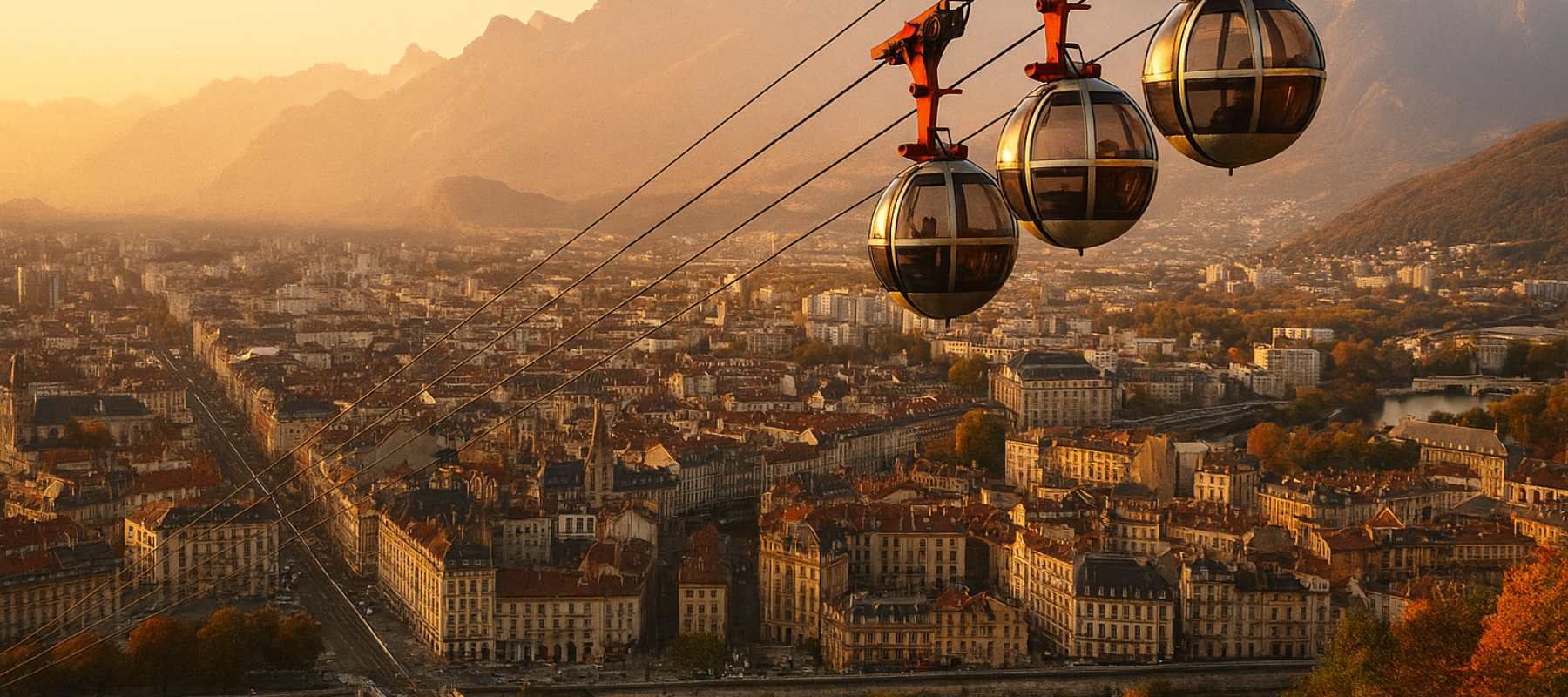
- Panorama: the Bastille and its fort, reached by cable car (the “bubbles”).
- History: the Old Town (Place St-André, Place Notre-Dame), to explore on foot in the city centre.
- Culture: Musée de Grenoble and Saint-Laurent Archaeological Museum, in the city centre.
- Region: Domaine de Vizille (Museum of the French Revolution), 15 km south of Grenoble.
It is called the capital of the Alps, and for good reason. Grenoble is a city nestled at the heart of three massifs: Belledonne, the Vercors and the Chartreuse. It is a dynamic urban hub where history and innovation meet. For holidaymakers at Camping Eden De La Vanoise, it is the ideal excursion for a day of culture and discovery. Allow about 1 h 20 by road (130 km) from our campsite in Savoie in the Tarentaise: a lovely day trip, outside our usual area but within easy reach for big-city lovers. Let us plan your visit to Grenoble together and discover tourism in the capital of the Alps.
The Bastille: the viewpoint over the city
The most iconic and popular site is without doubt the Fort de la Bastille. Perched at an altitude of 476 metres, it overlooks Grenoble and reveals one of the finest panoramas over the city and the Alps.
The experience starts in the city centre with the famous Grenoble-Bastille cable car. These famous “bubbles”, France's first urban cable car, leave from the Isère quayside, a stone's throw from the Maison du Tourisme Hubert Dubedout, the main tourist information office of the Grenoble tourist office, where you can pick up a city map.
Once at the top, there is no shortage of attractions: the Fort de la Bastille, an example of 19th-century military architecture, the Mountain Troops Museum and, above all, a 360° view over the city and the Belledonne, Vercors and Chartreuse massifs. A must-see to discover the city from its best angle.
A dive into 2,000 years of history and culture
If you prefer to visit Grenoble using soft mobility (on foot or by bike), the historic centre, or old town, is a real maze of cobbled lanes. It is organised around lively squares, near the rue de la République. Place Saint-André, with the former Dauphiné Law Courts, and Place Notre-Dame, at the foot of the cathedral, are its beating hearts. It is the ideal place if you are wondering what to do in Grenoble for a half-day of discovery.
The city is home to several must-see museums for culture lovers:
- Musée de Grenoble: one of the leading art institutions in France, showing works by old masters and modern figures such as Matisse and Picasso.
- Saint-Laurent Archaeological Museum: located in the Saint-Laurent district, it displays remains in situ, including a Merovingian necropolis and a 6th-century church. Guided tours trace 2,000 years of funerary and religious history.
- Musée de l’Ancien Évêché: housed in the former bishops' palace, it traces the history of the Isère and holds the remains of a 4th-century baptistery in its basement.
Beyond the ramparts: Vizille and the Alpine massifs
Exploration does not stop at the city centre. About fifteen kilometres to the south, the Domaine de Vizille is a must-see. This iconic site is home to the Museum of the French Revolution, housed in the Château de Vizille, where the 1788 Assembly of Vizille took place, a founding event of the French Revolution. Its park, listed as a “Remarkable Garden”, is a very popular place for a stroll. (You will find all tourist information on Vizille at the local office.) Entry to the park is free.
Grenoble is also the gateway to the great Alpine massifs. The Chartreuse massif can be discovered through villages such as Le Sappey-en-Chartreuse, while the Vercors plateau reveals its cliffs and high plateaus. These natural areas, which make up the metropolitan territory nestled in the heart of the Alps, offer a vast playground for hiking, mountain biking and skiing. This unique proximity between city and mountains perfectly embodies the spirit of the region.
From the ancient Roman Cularo to the innovative city of today, Grenoble offers a rich and varied visit. It is a hub where history, culture and science meet at the foot of the Alps. After a day of city sightseeing, you will enjoy returning to the calm of the Tarentaise. Our Eden De La Vanoise campsite welcomes you for your summer holidays in Savoie as well as your winter holidays in Savoie, combining relaxation, nature and discovery.
Do not hesitate to book your stay: this Grenoble tourist guide, along with a mobile app dedicated to local tourism, is just a starting point to plan your visit and discover the treasures of the region.
 Sébastien’s tip
Buy your tickets for the “bubbles” cable car online before you leave, the queue can be long in high season. And remember the Domaine de Vizille: entry to the park is free, a great option to split the day between culture and nature without breaking the bank.
See on the map